Dr Zaghloul Al-Najjar

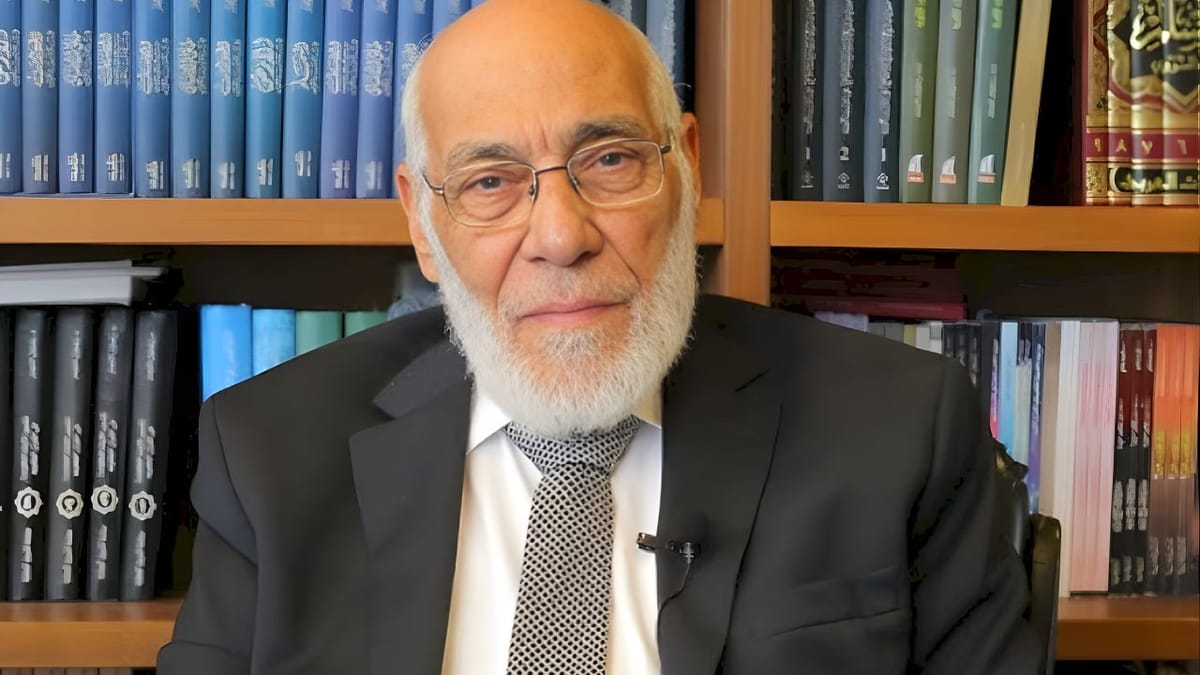
Zaghloul Al-Naggar (Arabic: زغلول النجار; 17 November 1933 – 9 November 2025) was an Egyptian geologist, Islamic scholar, educator, and author. He became internationally known for his work connecting science and the Qur’an, particularly the concept of “scientific miracles”, and served in teaching, research, and advisory roles across numerous institutions in the Middle East, the United Kingdom, and the United States.
Early Life and Education
Zaghloul Al-Naggar was born in Mashal village in the Gharbia Governorate of Egypt. He developed a passion for science early in life, learning the Qur’an by heart before the age of nine. After relocating to Cairo with his mother, Al-Naggar pursued his studies at government schools, eventually graduating with honours from Cairo University in geology in 1955 and receiving the Mustafa Baraka Award in Earth Sciences. He later earned a PhD in geology from the University of Wales (United Kingdom) in 1963, with a thesis titled “Geology and stratigraphic palaeontology of the Esna-Idfu Region, Nile Valley, Egypt”. He became a full professor in 1972.
Career
Al-Naggar’s academic and professional career spanned decades, with teaching and research appointments at universities in Egypt, the UK, Saudi Arabia, Qatar, Yemen, Jordan, and the United States. He chaired the geology department at Qatar University, taught at King Fahd University of Petroleum and Minerals in Saudi Arabia, and served as a visiting professor at UCLA. He directed Al-Ahqaf University in Yemen and taught at the World Islamic Sciences and Education University in Jordan.
Al-Naggar later became Chairman of the Committee of Scientific Notions in the Qur’an at the Supreme Council of Islamic Affairs (Cairo, Egypt), where he dedicated his work to exploring scientific concepts in the Qur’an. He was an elected Fellow of the Islamic Academy of Sciences, the Geological Society of London, the American Association of Petroleum Geologists, and the Geological Society of Egypt.
He was active in scientific outreach, authoring hundreds of lectures and articles, and directing projects connecting Islamic sciences and geology. His political activism during his student years led to imprisonment and eventual exile from Egypt until 1970.
Achievements
Fellowships: Elected to major international scientific societies.
Pioneering Qur’anic Science: Al-Naggar became the Arab world’s most prominent voice in the study of scientific miracles in the Qur’an, lecturing internationally on science, evolution, and faith.
Academic Leadership: Established and chaired geology departments at several universities, notably in the Middle East.
Awards: Received the Mustafa Baraka Prize (Earth Sciences) and Seventh Arab Petroleum Congress Best Papers Award (1970).
Books and Publications
Al-Naggar was a prolific author, publishing more than 45 books in Arabic, English, and French:
Numerous other works on geology, Qur’anic exegesis, and faith-science relations.
- The Geological Concept of Mountains in the Qur'an (2003)
- The Issue of Scientific Miracles in the Holy Quran (قضية الإعجاز العلمي للقرآن و ضوابط التعامل معها)
- Treasures in the Sunnah: A Scientific Approach
- Heaven in the Noble Qur'an
- The Earth in the Noble Qur'an
- Animals in the Noble Qur'an
- Scientific Precision in the Sunnah
- Numerous other works on geology, Qur’anic exegesis, and faith-science relations.
He published over 150 scientific articles and studies, many engaging with theories sometimes regarded as controversial in the wider scientific community, and supported the “Bucailleism” movement, which sought harmony between Islamic revelation and modern science.
Personal Life
Al-Naggar came from a conservative Egyptian background and maintained a deep attachment to Islam and scientific inquiry throughout his life. He was imprisoned for his political activism as a young man and exiled due to his association with the Muslim Brotherhood, returning to Egypt only in 1970.
Death
Zaghloul Al-Naggar died on 9 November 2025 at the age of 92. His passing was widely noted across the Arab world and the international Islamic scholarly community, with tributes highlighting his pioneering contributions to both geology and the study of scientific miracles in the Qur’an. News outlets, academic institutions, and religious bodies commemorated his lifelong service to education, research, and faith-science dialogue.
Legacy and Impact
Zaghloul Al-Naggar’s legacy lies in his fusion of Islamic scholarship with scientific investigation, his academic leadership in geology, and his high-profile promotion of Qur’anic scientific miracles. He influenced countless students and scholars across the Arab and Islamic worlds and was frequently referenced in debates over science and religion. Despite controversy over some of his views, he is remembered as one of the pivotal figures in modern Islamic science discourse, leaving a lasting mark on faith-science dialogue and Qur’anic exegesis.