Dr Recep Senturk

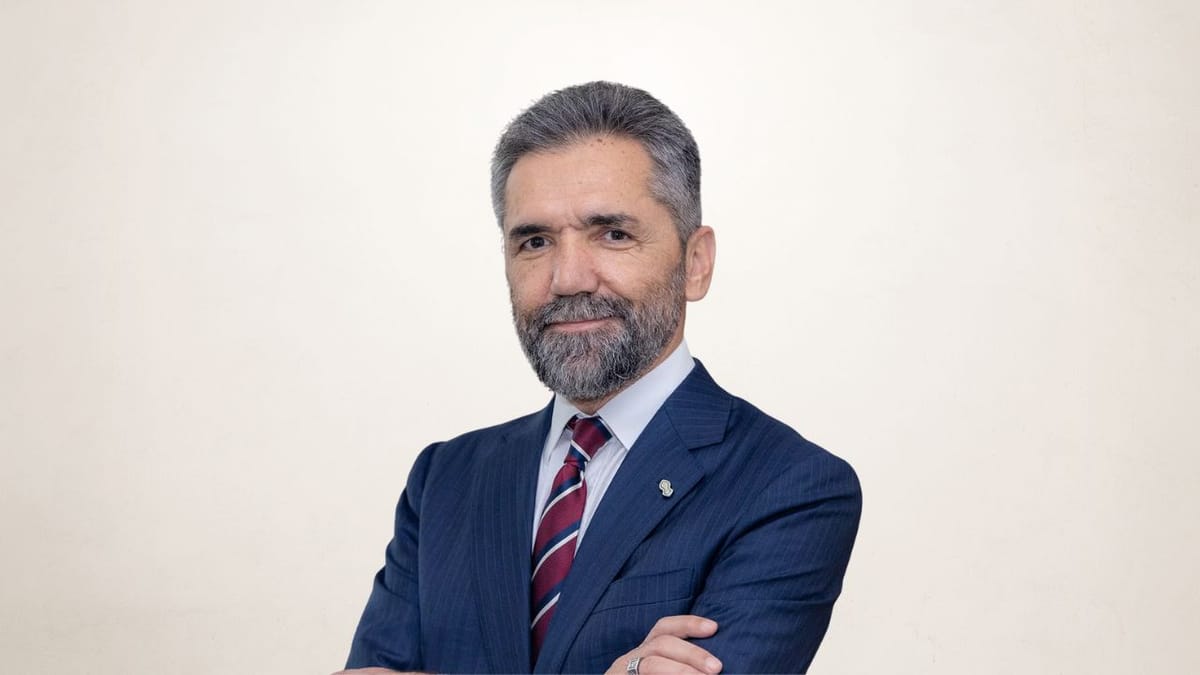
Dr. Recep Şentürk is a prominent Turkish sociologist, academic, and author, recognised for his pioneering research in social networks, civilisation studies, and Islamic thought. He has served as Dean of the College of Islamic Studies at Hamad Bin Khalifa University (HBKU) in Qatar, and was the founding president of Ibn Haldun University in Istanbul. Şentürk is widely known for his work on multiplexity in social theory, the intellectual legacy of Ibn Khaldun, and contributions to human rights discourse from an Islamic perspective.
Early Life and Education
Recep Şentürk was born in Turkey and began his higher education with a BA in Religion and Pedagogy from Marmara University. He then earned a master's degree in Sociology from Istanbul University, followed by a second master's and a PhD in Sociology from Columbia University, New York, completing his doctorate in 1998. This unique academic path allowed Şentürk to combine traditional Islamic scholarship with contemporary Western social science.
Career
Dr. Şentürk's academic and administrative career has spanned various leading institutions. Early in his career, he worked as an assistant instructor in the Department of Sociology at Istanbul University and as a teaching assistant at Columbia University. He undertook research roles at the Islamic Research Center (İSAM) in Istanbul and held visiting scholar or fellow positions at Oxford Brookes University, Rensselaer Polytechnic Institute, and Emory University School of Law.
He was the Director-General and Dean of Graduate Studies at the Alliance of Civilizations Institute at Fatih Sultan Mehmet Vakif University, Istanbul, and served as the founding director of the Istanbul Foundation for Research and Education (ISAR). Şentürk was a professor of sociology at Fatih University and held adjunct or visiting roles at numerous international institutions.
From 2017 to 2021, Şentürk was the founding president and professor of sociology at Ibn Haldun University, an institution renowned for its focus on civilisation studies and the social sciences. He then became Dean of the College of Islamic Studies at HBKU in Doha, Qatar. He is also the president of Usul Academy (Chicago), head of the International Ibn Khaldun Society, and serves on several academic editorial boards.
Achievements
- Human Rights Advocacy: Advanced research on human rights in the Ottoman context and their relationship with Islamic jurisprudence and ethics.
- Multiplexity Theory: Developed the conceptual framework of “multiplexity” to analyse social structures, networks, and civilisations, influencing modern sociology and interdisciplinary studies.
- Educational Leadership: Founding president of Ibn Haldun University, where he implemented a curriculum integrating rational, spiritual, and moral education, inspired by Islamic intellectual tradition.
- International Scholarship: Led and contributed to research programmes at major global institutions, bridging Islamic and Western social science methodologies.
Books and Publications
Dr. Şentürk is a prolific author, publishing in English, Turkish, and Arabic. His most significant works include:
- Narrative Social Structure: Anatomy of the Hadith Transmission Network 610–1505 (Stanford University Press, 2005)
- Open Civilization: Cultural Foundations of Pluralism (2010, Turkish/English)
- Sociology of Turkish Thought: From Fiqh to Social Science (2008, Turkish)
- Islam and Human Rights: Sociological and Legal Perspectives (2007/2014, Turkish/English)
- Malcolm X: Struggle for Human Rights (2006, Turkish/English)
- Social Memory: Hadith Transmission Network 610–1505 (2004, Turkish)
- Multiplexity and Open Civilization, and Futuwwah: Youth Ethics/Futuwwah: Noble Character (2022)
- Modernisation and Social Sciences in the Muslim World: A Comparison between Turkey and Egypt (2006, Turkish)
Şentürk has also edited volumes on Ibn Khaldun, values, economics, and the sociology of religion, and contributed numerous book chapters and scholarly articles.
Personal Life
Dr. Şentürk’s personal life is shaped by a blend of traditional and modern education, reflected in both his career and writings. Further biographical details such as his family life remain private in line with academic convention.
Legacy and Impact
Dr. Recep Şentürk’s scholarship has advanced the theoretical foundations of sociology in the Muslim world, particularly in the understanding of human social networks and civilisational plurality. As an educator and institutional leader, he has played a central role in shaping social science curricula and promoting the holistic, multiplex approach in academic discourse. His books and public lectures continue to inspire scholars and students in Turkey, the Middle East, and internationally, cementing his legacy as a major figure in contemporary Islamic and social thought.