Renowned Islamic Scholar Syed Muhammad Naquib Al-Attas Passes Away
Dr. Syed Muhammad Naquib al-Attas, the eminent Malaysian Islamic philosopher and one of the most influential Muslim intellectuals of the modern era, has passed away at the age of 95.

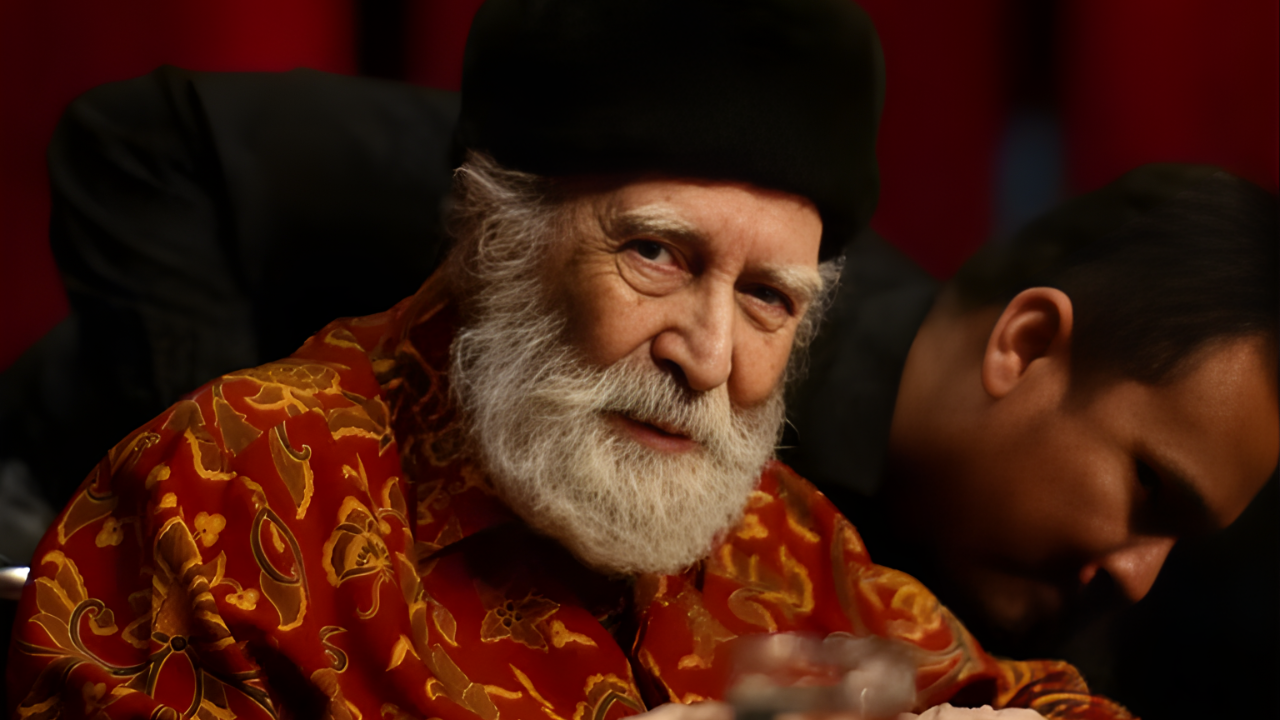
Dr. Syed Muhammad Naquib al-Attas, the eminent Malaysian Islamic philosopher and one of the most influential Muslim intellectuals of the modern era, has passed away at the age of 95. He died on the night of the 19th of Ramadan (March 8, 2026), marking a profound loss for the Islamic world.
Naquib al-Attas, who was born on September 5, 1931, in Bogor, West Java, left an indelible mark on Islamic education, philosophy, and the global understanding of Islamic civilisation. His death marks the end of an era for contemporary Islamic thought, particularly in Southeast Asia, where his contributions helped reshape the intellectual landscape.
A Life Devoted to Islamic Intellectual Revival
Naquib al-Attas came from a distinguished lineage rooted in Islamic scholarship and nobility. His family traced its heritage back to the Prophet Muhammad, with ancestors who were renowned scholars, saints, and members of royal houses across the Islamic and Malay worlds. This rich heritage shaped his intellectual trajectory and informed his lifelong commitment to advancing Islamic thought within a modern context.
His educational journey reflected his cosmopolitan outlook and intellectual rigour. After studying at the Royal Military Academy Sandhurst in England, he pursued advanced Islamic studies at some of the world's leading universities, earning his Master's degree from McGill University in Canada and his PhD from the University of London. His doctoral dissertation on "The Mysticism of Hamzah Fansuri," a foundational figure in Southeast Asian Sufism, became one of the most important and comprehensive works on the subject.
The Pioneer of "Islamisation of Knowledge"
Al-Attas is perhaps best remembered for pioneering the transformative concept of the "Islamisation of Knowledge", a framework that sought to reorient modern education and scientific inquiry within the metaphysical and ethical foundations of Islam. Rather than accepting the secular epistemological framework that dominated Western academia, he developed an integrated approach that challenged the fragmentation of knowledge inherent in contemporary education.
His philosophical methodology centred on a unified Islamic worldview that harmonised reason and experience with higher orders of human consciousness, grounded in philosophical Sufism. He argued that science and Islamic thought were not in conflict but rather complementary, both rooted in principles of rationality and observation. This vision influenced generations of scholars and educators across the Muslim world.
Institutional Leadership and Academic Excellence
Throughout his career, al-Attas held numerous prestigious academic positions. In 1965, he returned to Malaysia and became a key figure at the University of Malaya and later the National University of Malaysia, where he served as the first holder of the Chair of Malay Language and Literature. His advocacy for Malay as the language of instruction at the university level and his integrated approach to studying Malay language, literature, and culture left a lasting impact on Malaysian higher education.
In 1973, he founded the Institute of Malay Language, Literature and Culture (IBKKM) at the National University of Malaysia, a pioneering institution that preserved and advanced Islamic-Malay intellectual heritage. A decade later, in 1987, he established the International Institute of Islamic Thought and Civilization (ISTAC) in Kuala Lumpur, which became a major global academic institution. Under his vision and direction, ISTAC developed a unique multilingual library containing over 140,000 volumes, including rare manuscripts and books he personally collected over a decade. The institute's architecture, which al-Attas designed himself, embodied his educational philosophy, and it became a beacon for Islamic scholarship worldwide.
Beyond Malaysia, al-Attas held visiting professorships at prestigious institutions, including Temple University in Philadelphia and Ohio University. He was also a prolific speaker, delivering more than 400 lectures throughout Europe, the United States, Japan, and the Muslim world.
Scholarly Output and Intellectual Contributions
Al-Attas was a polymath whose intellectual output was staggering in both breadth and depth. He authored 27 authoritative works on theology, philosophy, metaphysics, Sufism, cosmology, and Malay language and literature. Among his most influential works are "Islam and Secularism," "Prolegomena to the Metaphysics of Islam," "Islam and the Philosophy of Science," and "The Intuition of Existence."
His scholarship was characterised by a distinctive style and precise vocabulary, particularly in his Malay writings, which helped establish him as a defining voice in contemporary Islamic thought. His contributions to understanding the history of Islam in the Malay-Indonesian Archipelago earned recognition from historians worldwide, and his formulation of a general theory of Islamization in Southeast Asia became foundational to scholarly discourse in the region.
National and International Recognition
The depth of al-Attas' contributions to Islamic thought and civilization earned him numerous accolades throughout his lifetime. In recognition of his groundbreaking scholarship, he was awarded the prestigious King Faisal Award for Islamic Studies in 1990. He received an Honorary Doctorate of Arts from the University of Khartoum in 1995 and was made a Member of the Royal Academy of Jordan by King Hussein in 1994.
In 1993, appointed by then-Deputy Prime Minister Anwar Ibrahim, he became the first holder of the Abu Hamid al-Ghazali Chair of Islamic Thought at ISTAC—a position that reflected his preeminence in the field. In 1999, he was honored with the title of Royal Professor (Profesor Diraja), becoming only the second Malaysian to receive this distinction after Ungku Abdul Aziz.
His influence extended to international recognition; he was listed among the 500 most influential Muslims in 2010. The Organization of Islamic Conference (OIC) and the Russian Academy of Sciences also recognized his scholarly achievements. In 1975, he was conferred Fellow of the Imperial Iranian Academy of Philosophy for his contributions to comparative philosophy.
A Comprehensive Intellectual Vision
What distinguished al-Attas among contemporary Muslim thinkers was the comprehensiveness and coherence of his intellectual vision. He did not compartmentalise knowledge into separate disciplines but sought to articulate a unified Islamic metaphysical system that could guide education, science, and civilization. His work on Islamic metaphysics emphasized that it is a unified system disclosing the ultimate nature of Reality, integrating reason and experience with higher orders of consciousness accessible through philosophical Sufism.
He was equally at home discussing the philosophical principles underlying natural sciences as he was explicating classical Islamic theological concepts or analyzing the development of the Malay language. This integration of traditional Islamic sciences with contemporary scholarship made him a unique voice in the modern Islamic intellectual landscape.
The Teacher and Mentor
Beyond his published works and institutional achievements, al-Attas profoundly influenced students and colleagues who studied under him or worked alongside him. He inspired a generation of new scholars who continue to develop and disseminate his ideas. His student and successor, Professor Wan Mohd Nor Wan Daud, now holds The Distinguished Syed Muhammad Naquib al-Attas Chair of Islamic Thought at Universiti Teknologi Malaysia, ensuring the continuity of his intellectual legacy.
Legacy and Continuing Influence
The passing of Syed Muhammad Naquib al-Attas represents the loss of one of the most significant Islamic intellectuals of the late 20th and early 21st centuries. His life's work—articulated through 27 major scholarly works, countless lectures, and numerous institutions—continues to shape how Muslims understand the relationship between Islamic thought and modernity, between spiritual development and intellectual inquiry, and between traditional Islamic sciences and contemporary knowledge.
In an era of increasing secularization and fragmentation of knowledge, his vision of an integrated Islamic worldview remains profoundly relevant. His insistence that Muslims need not choose between tradition and modernity, between science and spirituality, between reason and revelation, offers a framework that continues to inspire scholars and educators working to revive Islamic intellectual culture.
ISTAC, which he founded and directed, stands as a testament to his commitment to creating spaces where Islamic thought can flourish with the rigour and sophistication it deserves. His books remain widely read in Islamic studies programs and by thoughtful Muslims seeking to understand their faith in the contemporary world.
Syed Muhammad Naquib al-Attas leaves behind a monumental intellectual legacy that will continue to influence Islamic thought, Muslim education, and the global discourse on knowledge, civilization, and the future of Islamic societies for generations to come. His vision of the Islamisation of knowledge—a transformative reimagining of how we understand, organize, and transmit human learning, remains his most enduring contribution to the Islamic world and to human knowledge itself.