Sheikh Dr Saleh Al Humaid

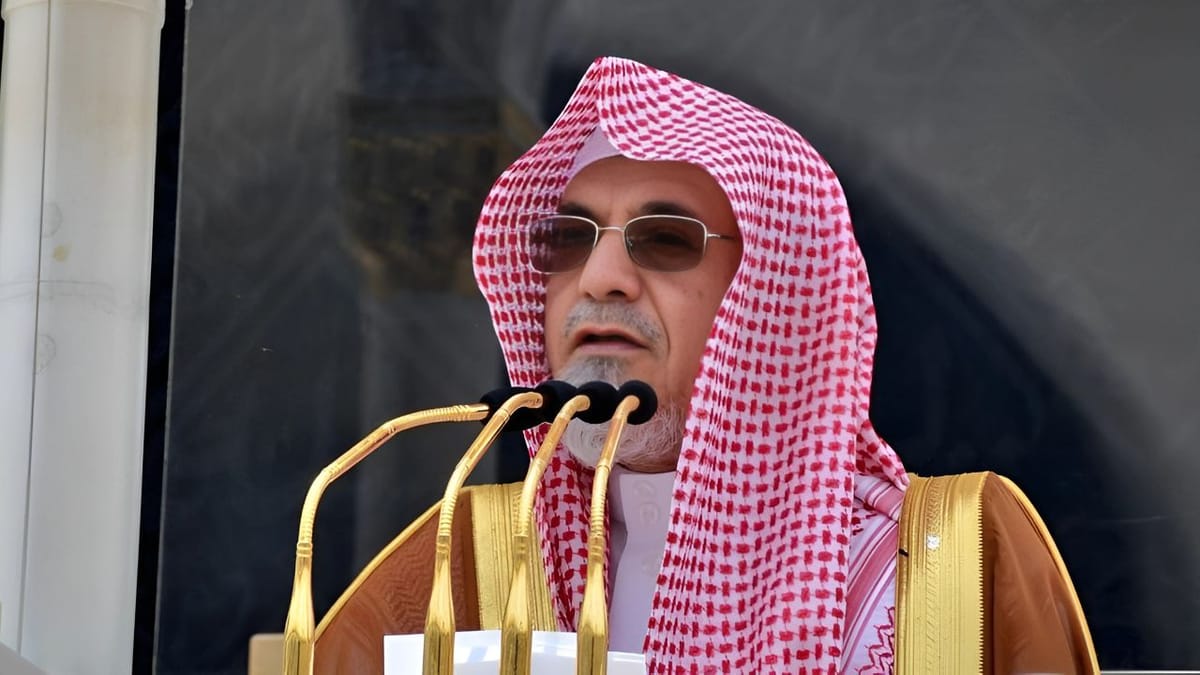
Sheikh Dr Saleh Al Humaid (also spelled Salih ibn Humayd, full name Saleh bin Abdullah bin Mohammed bin Humaid) is a prominent Saudi Islamic scholar, jurist, imam, and statesman. He is currently the Grand Mufti of Saudi Arabia, a member of the Council of Senior Scholars, and one of the imams of the Grand Mosque (Masjid al-Haram) in Mecca. Throughout his extensive career, he has played leading roles in religious, academic, and governmental institutions, and is recognised for his influential scholarship, sermons, and public service.
Early Life and Education
Sheikh Saleh Al Humaid was born in 1949 (or 1950, according to some sources) in Buraidah, Qassim Province, Saudi Arabia. He memorised the Qur’an at an early age and completed his primary and secondary education in Buraidah before moving to Mecca.
He earned his bachelor’s degree in Islamic law (Shariah) from King Abdul Aziz University, Makkah (now part of Umm Al-Qura University) in 1975, followed by a master’s degree in 1976 and a PhD in Fiqh and its principles from Umm Al-Qura University in 1981.
Career
Dr Saleh Al Humaid began his career at Umm Al-Qura University, progressing through positions such as assistant lecturer, lecturer, assistant professor, chairman of the Department of Islamic Economics, and eventually Dean of the College of Sharia. He also served as Director of the Center for Graduate Studies and Head of Graduate Studies at the Sharia College.
In 1982 (or 1983), he was appointed as an Imam and Khateeb (sermon deliverer) at the Grand Mosque in Mecca, a position in which he continues to serve, frequently leading prayers and delivering notable sermons during Hajj and Ramadan. In addition to his religious duties, he has held numerous leadership positions:
Chairman of the Shura Council of Saudi Arabia (2002–2009), a key role contributing to the country’s legislative advisory process.
President for the Affairs of the Two Holy Mosques (2000–2002), overseeing the administration of Islam’s holiest sites.
Chairman of the Supreme Judicial Council (from 2008 for three years), Saudi Arabia’s highest religious legal body.
President of the International Islamic Fiqh Academy (since 2007), a globally recognised authority on Islamic jurisprudence.
Advisor to the Saudi Royal Court and member of the Council of Senior Scholars (since 2001).
Dr Al Humaid has represented Saudi Arabia at international conferences, seminars, and forums, and has contributed to policy and scholarship in Islamic law, economics, and dialogue.
Achievements
Scholarly recognition: Widely respected among global Islamic scholars for his expertise in jurisprudence, leadership in collective ijtihad, and interfaith dialogue.
King Faisal International Prize for Service to Islam (2016): Awarded for his contributions to Islamic scholarship and service to the Muslim community.
Leadership and reforms: Key roles in modernising the administrative, religious, and legislative framework of Saudi Arabia, particularly in the advisory and judiciary sectors.
Books and Publications
Sheikh Dr Saleh Al Humaid is the author of numerous books, research papers, and sermons in Arabic, some of which have been widely published and translated. His notable works include:
- Lifting Embarrassment According to Islamic Sharia: Its Rules and Applications
- The Complete Jurisprudence of Calamities
- Sermons of the Great Mosque: Guidance and Remembrance
- Refutation of Ambiguities around the Issues of Living Reality
- The Concept of Wisdom in Dawah
- The Happy Home and Disagreement Between Spouses
- Collective Ijtihad and its Importance in Contemporary Calamities
- The Principles of Dialogue and its Etiquette in Islam
- Islamic Principles and Rules of Debate
- Seditions and Unrests: Landmarks and Reflections
These works cover a wide range of topics, including Islamic jurisprudence, family life, ethics, public policy, and the principles of religious and social dialogue.
Personal Life
Sheikh Saleh Al Humaid was born into a scholarly family, the son of Sheikh Abdullah ibn Humaid, himself a respected Islamic scholar and judge. Further details of his personal and family life remain private, in line with common practice among senior Saudi scholars.
Legacy and Impact
Sheikh Dr Saleh Al Humaid's legacy is defined by decades of scholarship, public service, and religious leadership in Saudi Arabia and the wider Muslim world. As Imam of the Grand Mosque in Makkah and Grand Mufti of Saudi Arabia, his sermons and legal opinions have shaped contemporary Islamic thought and practice. His administrative and academic reforms, as well as his books, continue to influence Islamic jurisprudence, education, and religious discourse globally. He is revered for his wisdom, integrity, and dedication to the service of Islam.