The Rise of Islamic Psychology in India: A Paradigm Shift in Mental Health Care
Islamic psychology is steadily gaining recognition in India as a discipline that integrates Islamic teachings with evidence-based psychological principles. By drawing on faith, this approach provides an alternative framework for mental health care, particularly within the Muslim community, where religion is central to daily life. Across the country, a growing group of scholars, practitioners, and institutions is driving this movement, aiming to bridge the gap between faith and mental well-being.
What is Islamic Psychology?
The International Association of Islamic Psychology (IAIP) defines it as a discipline rooted in the Islamic worldview, drawing on the Qur’an and Sunnah to understand human nature. It approaches individuals holistically, considering the nafs (soul), qalb (heart), aql (intellect), and ruh (spirit). This differs from Western paradigms by emphasising spiritual needs, resonating particularly with communities where religion is integral to everyday life.
Pioneers and Progress
Islamic psychology in India traces its roots to scholars like Shaikh Aḥmad Sirhindi, Shah Waliullah Dehlawi, and Maulana Ashraf Ali Thanvi. Thanvi’s work was instrumental in linking spiritual and psychological development. He classified the self into three types—Nafs Ammara (the base self), Nafs Lavvama (the guilt-driven self), and Nafs Mutmainna (the tranquil self-aligned with divine guidance). His work shaped the ethical and psychological understanding of Muslims in India and laid the foundations for a uniquely Islamic approach to psychotherapy.
“Since Thanvi’s time, the field has evolved, with modern scholars like Professors Akbar Husain, Naved Iqbal, and Azizuddin Khan advancing the study of Islamic psychology in India,” says Zulekha Shakoor Rajani, a Counselling Psychologist who co-heads the Islamic Psychology department at Mind and Brain Hospital in Bengaluru. These scholars have focused on integrating Islamic principles with contemporary psychological practices, using religious texts and modern scientific methods. “They emphasise blending qualitative and quantitative approaches to understanding human behaviour, drawing from the rich legacy of Islamic thought, including the works of medieval scholars like Imam Al-Ghazali, Ibn Sina and Al-Razi,” she adds.
Islamic psychology is a comprehensive system grounded in the Qur’an and Sunnah. "Islamic psychology helps people understand their struggles within an Islamic paradigm," explains Zulekha Rajani, who holds an M.Sc. in Psychology, and has studied Islamic Psychology at Cambridge Muslim College in the UK, and trained in the Traditional Islamically Integrated Psychotherapy (TIIP) model at the Khalil Center in Istanbul, Türkiye.
In 2023, Mind and Brain Hospital became the first hospital in India to establish an Islamic Psychology department, co-headed by Rajani, marking a significant milestone in the integration of faith-based mental health care in the country. The hospital’s approach incorporates spiritual principles as the foundation for personal development and healing, while also addressing conventional psychological diagnoses such as depression, trauma, and identity crises. 'We promote not just mental, but also spiritual balance through a deeper connection with God,' Rajani notes.
This shift represents a departure from mainstream psychology, which often views the mind in a secular, materialistic context. The Islamic model, however, integrates spirituality into mental health treatment. "There are fundamental differences in how we understand human personality," explains Shujauddin Fahad Inamdar, a psychotherapist, research scholar, and co-head of the Islamic Psychology department at Mind and Brain Hospital. "Our understanding is based on the Qur'an and Sunnah, where spiritual needs are central to shaping human behaviour and well-being."
The Holistic Approach
A key feature of Islamic psychology is its holistic approach, addressing the mental, emotional, and spiritual dimensions of an individual’s life. “In mainstream psychology, there are various models, from Freudian to cognitive approaches,” Inamdar explains. “Similarly, we have an Islamic model that sees human motivation as inherently tied to spiritual goals. A healthy personality in our tradition is described as Qalb-e-Saleem (a pure and sound heart).”
Rather than solely focusing on symptoms or pathology, Islamic psychology prioritises spiritual growth and resilience. Therapy involves practices such as muraqabah (spiritual mindfulness) and tafakkur (contemplation), rooted in traditional Sufi practices, alongside modern psychological techniques. These practices help individuals connect with their Creator, fostering a sense of purpose and emotional balance.
“Our interventions are bottom-up,” says Inamdar. “We begin with the soul and heart before addressing the mind, which contrasts with secular psychology that starts with cognitive and behavioural interventions.”
From Theory to Practice
Although the concept of Islamic psychology has long been embedded in Islamic tradition, only in recent years has it gained academic recognition. “Islamic psychology received a major boost from the global decolonial movement, which questioned the dominance of Western psychological models,” Inamdar says. “This led the American Psychological Association (APA) to validate spiritual psychology as a legitimate field of study.”
Dr Malik Badri, often referred to as the "Father of Islamic Psychology," played a crucial role in pioneering the recognition of this field. He challenged Western psychological paradigms by integrating Islamic concepts with modern practices. Through his seminal work, The Dilemma of Muslim Psychologists, Dr Badri highlighted the importance of using Islamic principles to understand the human psyche. His efforts laid the foundation for the global growth of Islamic psychology, inspiring many scholars and practitioners.
In India, the groundwork for Islamic psychology began in 2015, with formal research and theorisation. The practical application of these principles gained momentum in 2020, and the field is now experiencing rapid growth. Inamdar credits organisations such as the Indian Council for Islamic Perspective on Psychology (ICIPP) started by the Centre for Study and Research (CSR India), the Institute of Objective Studies, and the International Students of Islamic Psychology (ISIP) for promoting Islamic psychological practice and research. These bodies have organised conferences and published research that has bolstered the field’s presence in India and internationally.
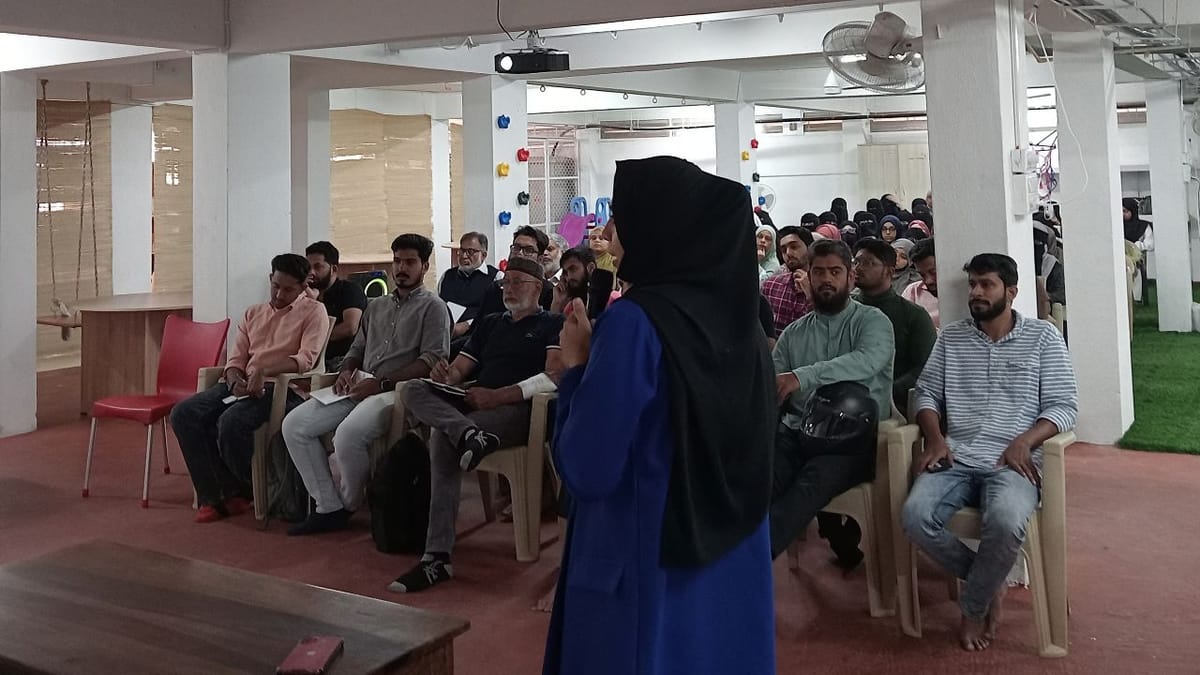
“We’ve also collaborated with groups like the Students Islamic Organisation (SIO) and Jamaat-e-Islami Hind (JIH) to raise awareness,” Inamdar notes. “Through these partnerships, we’ve reached over 2,000 people with workshops and initiatives aimed at promoting mental health from an Islamic perspective.”
Academic Integration and Research
India’s academic landscape has begun recognising Islamic psychology, with universities like Aligarh Muslim University (AMU) incorporating it into their curricula. Professors Akbar Husain at AMU and Naved Iqbal at Jamia Millia Islamia are pivotal in introducing Islamic psychology to students through teaching and research.
The University Grants Commission (UGC) has approved postgraduate courses that integrate Islamic psychological principles, further embedding the field into the national academic framework. These programmes provide students with a comprehensive understanding of Islamic psychology while encouraging rigorous research and practical applications.
Challenges and Opportunities
Despite its growing acceptance, Islamic psychology faces challenges. “People often attribute psychological issues to ‘nazar’ (evil eye) or black magic, which can delay proper treatment,” explains Rajani. In such cases, they collaborate with Raqis—Islamic spiritual healers—to provide a more holistic approach.
Islamic psychologists in India also contend with modern issues such as religious obsessive-compulsive disorder (OCD), existential crises, and gender identity challenges. “Existential counselling is particularly important,” Inamdar says. “We help individuals navigate questions of meaning and purpose, grounded in Islamic spirituality.”
Islamophobia and social marginalisation add to the psychological trauma many Indian Muslims face. “There is trauma rooted in the socio-political context of Islamophobia,” Inamdar notes. At Mind and Brain Hospital, these issues are tackled using Islamic psychology and strength-based counselling, drawing on core Islamic virtues like tawakkul (trust in God), sabr (patience), and shukr (gratitude).
A Growing Movement
As awareness of Islamic psychology grows, so does the demand for its services. “We’ve built a task force of 50 people within the ISIP India chapter,” Inamdar shares. “There’s a thirst for knowledge, and we are committed to expanding this movement. Mainstream psychology alone cannot meet the spiritual needs of Muslim clients.”
Rajani echoes this sentiment, emphasising that Islamic psychology is about more than treating mental health issues. “We are helping individuals balance their emotional and spiritual lives, something often missing in conventional therapy,” she explains.
As more Indian Muslims realise the benefits of Islamic psychology, it is clear that this holistic, faith-centred approach will play an increasingly important role in the future of mental health care in the country. “We’re at the start of a new chapter in psychology,” Inamdar concludes. “One where faith and science come together to heal the mind, body, and soul.”