Visionary Leadership and Innovation: The Legacy of Necmettin Erbakan and Özdemir Bayraktar
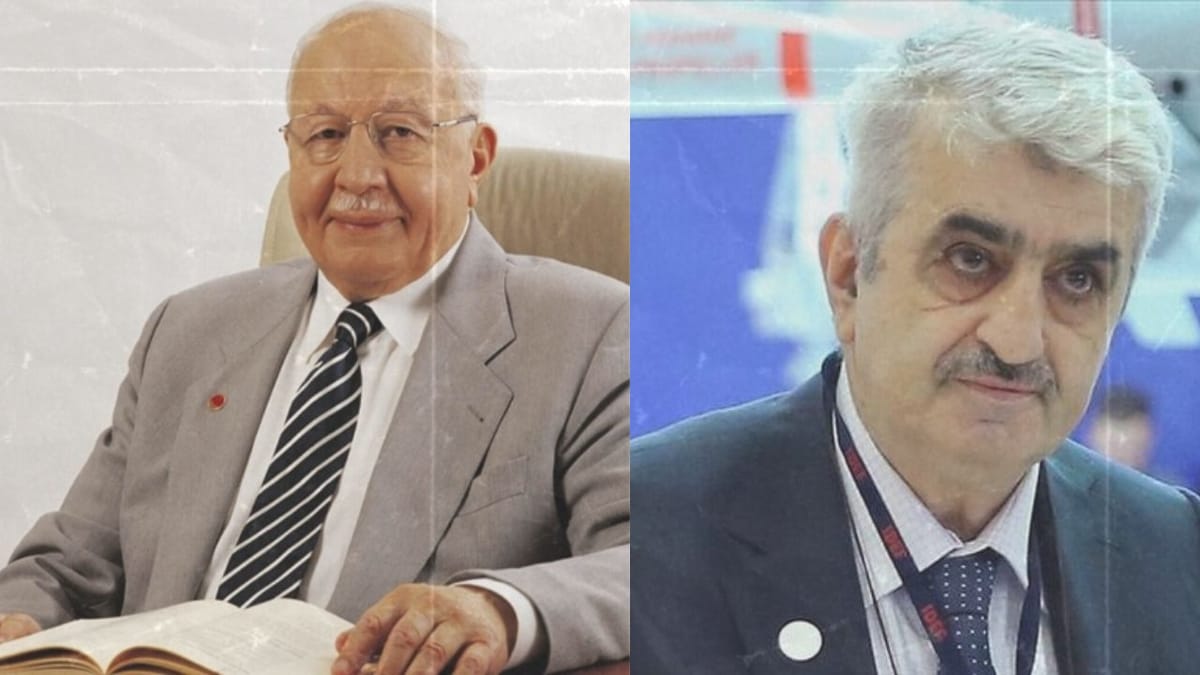
In the annals of Türkiye's technological advancement, the collaboration between Prof. Dr. Necmettin Erbakan, a visionary political leader and former Prime Minister of Türkiye, and Özdemir Bayraktar, a pioneering engineer, stands as a unique example of leadership meeting innovation. Their partnership laid the groundwork for Baykar, the company that has transformed Türkiye into a global player in unmanned aerial vehicle (UAV) technology.
A Pivotal Meeting of Minds
In 2006, during the Muslim Communities Union Meeting organized in Türkiye, an event unfolded that would have lasting implications for the nation's defense capabilities. Mustafa Kaya, Vice Chairman of the Saadet Party and columnist for Milli Gazete, recounted this significant moment.
As the conference progressed, Prof. Dr. Necmettin Erbakan urgently summoned the organizers. "Quickly find Özdemir [Bayraktar]. Bring Selçuk with him urgently," he instructed. Responding without delay, Özdemir Bayraktar and his son, Selçuk Bayraktar, arrived. Erbakan then directed Selçuk, "Open your computer. You will make your presentation here."
Before an audience comprising representatives from various Islamic countries—about 80% of the attendees—Selçuk Bayraktar showcased the initial prototypes of Turkey's indigenous UAVs, including hand-launched models. Delivering his presentation in English, Selçuk demonstrated not only technical expertise but also the potential for Türkiye and other Muslim nations to achieve self-reliance in advanced technologies.
Following the presentation, Erbakan addressed the delegates: "We have unfortunately missed the train of heavy industry. Now, you must support such high-tech projects in your countries. If a country has a certain number of aircraft carriers, by the time you catch up, they will have built even more. You must invest in advanced technology."
Erbakan's Visionary Influence
Prof. Dr. Necmettin Erbakan was more than a political leader; he was a visionary who championed economic independence and technological advancement for Türkiye and the broader Muslim world. As the founder of the Milli Görüş (National Vision) movement and the 54th Prime Minister of Türkiye, Erbakan advocated for the development of national industries to reduce reliance on foreign powers.
His interaction with the Bayraktar family was not coincidental but a reflection of his commitment to fostering indigenous innovation. Erbakan recognized the significance of the Bayraktars' work at a time when Türkiye was dependent on foreign UAVs like Israel's Heron and the U.S.'s Predator—both of which were inadequate for Türkiye's needs.
Mustafa Kaya noted, "We understood that Erbakan Hodja was closely following Selçuk Bey's work. At that time, persuading the government of the project's importance was not easy. Eventually, the government supported the project, albeit belatedly. They did the right thing."
Özdemir Bayraktar: The Patriarch of Turkish UAVs
Often likened to early Turkish aviation pioneers such as Vecihi Hürkuş and Nuri Demirağ, Özdemir Bayraktar was instrumental in establishing Turkey's modern defense industry. His unwavering dedication to his country and the Muslim world propelled him to overcome numerous obstacles.
A close friend of President Recep Tayyip Erdoğan—referring to each other as "Tayyip" and "Ağabey" (elder brother)—Özdemir's relationship with the political leadership was pivotal. Erdoğan provided significant support to Baykar, even in the face of international pressures and threats.
Özdemir instilled in his sons, particularly Selçuk and Haluk, the values of hard work, integrity, and faith. Selçuk Bayraktar once said of his father, "Our father always taught us to be hardworking, moral, and honest. We inherited our passion for aviation and dedication to engineering from him. He still continues to work with us in the factory day and night, guiding us."
A Family Dedicated to National Service
The influence of the Bayraktar family extends beyond Özdemir. Canan Bayraktar, one of the first female computer programmers in the Islamic world, contributed significantly to her sons' upbringing and education. Writing software in assembly language, she broke barriers and set an example for future generations.
In a heartfelt message to her sons, she declared, "My sons, if you do not present this technology we have developed to the honorable sons of the Turkish military, despite all kinds of obstacles, intrigues, and intimidation policies, know that I will consider you unsuccessful. I beseech you as a right of my milk."
This profound sense of duty and commitment to service of the Muslim Ummah became a driving force for Baykar's success.
Transforming Regional Dynamics
The impact of Baykar's UAVs and unmanned combat aerial vehicles (UCAVs) has been transformative on regional and international stages. Their deployment has altered power dynamics, compelling even dominant forces to reconsider their strategies.
In conflicts across Syria, Iraq, and Libya, Bayraktar drones have provided Türkiye with a strategic advantage. Reports emerged from Libya's deserts describing the drones as "ghosts" or "invisible eagles" that appeared suddenly, leading some local tribes to believe they were witnessing the arrival of the Mahdi's army or the spirit of Omar Mukhtar.
Such narratives underscore the psychological and tactical influence of indigenous technology in conflict zones. As noted in a Twitter thread by user Mustafa Guldağı (@myzccc), "Wherever the UAVs and UCAVs enter, regional balances suddenly change. Even dominant powers change. The enemy suddenly decides to sit at the table to make an agreement with Türkiye."
Challenges and Resilience
The ascent of Baykar and the Bayraktar family's prominence were not without challenges. Western media and foreign governments viewed Türkiye's burgeoning independence in defense technology with suspicion. According to Guldağı, smear campaigns were initiated, and threats were made against both President Erdoğan and Selçuk Bayraktar.
Despite this, the Bayraktars remained steadfast. When asked if Baykar had any receivables from the state, Özdemir Bayraktar replied, "We cannot have such things as receivables or payables from this state; this is our homeland. We did everything for this place."
A Legacy for the Muslim World
The collaboration between Necmettin Erbakan and Özdemir Bayraktar exemplifies what is possible when visionary leadership aligns with passionate innovation. Their legacy is not just a national asset for Türkiye but a beacon of inspiration for the global Muslim community.
Their story highlights the importance of self-reliance, technological advancement, and unity in the Muslim world. As Erbakan emphasized, investing in advanced technology is crucial for nations to not only catch up but also to lead.
The Legacy of Necmettin Erbakan in Turkish Industry
To truly understand the revolutionary impact of Bayraktar's work, one must first recognize the foundation laid by Necmettin Erbakan, a pivotal figure in Türkiye's industrial development. Long before Bayraktar, Erbakan’s vision for an independent and self-reliant Türkiye sparked the country’s journey toward heavy industry and technological innovation.
Necmettin Erbakan’s contribution to Türkiye's industrial base began in 1956 with the Gümüş Motor project, a domestic initiative aimed at reducing Türkiye’s reliance on foreign motor imports. His belief in national production—milli üretim—echoed throughout his political career, particularly in his establishment of heavy industries like machinery, defense, and even automotive production. In 1973, as the leader of the National Salvation Party (MSP), Erbakan became deputy prime minister, pushing forward his industrial agenda. His efforts were vital in laying the groundwork for future advancements in defense technology, which would later be championed by innovators like Bayraktar.
Erbakan’s role as the father of Türkiye's industrialization movement was not merely in developing factories; it was in instilling the idea that Türkiye needed to stand on its own feet economically and technologically. His leadership helped create the Turkish Aerospace Industries (TUSAŞ) in 1984, an institution that would one day be instrumental in the development of indigenous defense systems. Through these contributions, he offered the blueprint for a self-sufficient nation capable of innovating in critical sectors like aviation and defense.
Bayraktar, who had the privilege of growing up during the era of this national awakening, undoubtedly drew inspiration from this legacy. It is no coincidence that his drones, symbols of Turkish ingenuity, arose from a society increasingly aware of the strategic necessity of national defense and technological independence. Bayraktar's father, Özdemir Bayraktar, shared a close relationship with Erbakan, having worked with him during these early stages of industrial growth. The family’s deep connection to Erbakan’s mission to transform Türkiye into a technological powerhouse set the stage for Selçuk’s own rise as a pioneer in defense technology.
Erbakan’s vision also had a profound ideological influence. His belief that Türkiye should rely on its own intellectual resources to advance its industry directly parallels the ethos behind Bayraktar's work. Bayraktar, in interviews, often emphasized the need for a mentality shift in Turkish society—moving away from a reliance on foreign-made products to the creation of homegrown technologies, something Erbakan championed decades before.
In many ways, Erbakan's ideas about industrial self-sufficiency were prophetic. Today, Türkiye’s defense industry, powered by innovations like the Bayraktar drones, is seen as a symbol of national pride. The drones are not just machines but representations of a long-standing goal to assert Türkiye’s independence on the global stage—a vision Erbakan initiated and Bayraktar realized. The first significant deployment of Bayraktar’s drones took place in 2014 during counter-terrorism operations, marking a historic milestone in Turkey’s defense capabilities.
As Mustafa Kaya, vice chairman of the Saadet Party, noted in reflecting on Erbakan’s industrial legacy, “The roadmap for Turkey’s industrial future was drawn by Erbakan. What we see today in defense and technological advancements are the fruits of his struggle.” Kaya’s words resonate even more when considering how integral Erbakan’s contributions were to Türkiye's ability to produce not just consumer goods, but advanced technological systems that would come to define the nation's strategic capabilities.
Bayraktar's achievements, then, are not isolated instances of brilliance but are part of a continuum of Turkish innovation, rooted deeply in the vision of a man who saw Türkiye's potential long before anyone else did. The drones that today fly over Turkish skies and in conflict zones across the world are, in many ways, an extension of Erbakan's dream for an independent, technologically advanced Türkiye—made possible by the diligence, ambition, and creativity of figures like Özdemir Bayraktar.
The enduring impact of Necmettin Erbakan's vision and Özdemir Bayraktar's dedication serves as a powerful reminder of the transformative potential when leaders and innovators unite for a common cause. Their legacy continues through the work of Selçuk Bayraktar and Baykar, propelling Turkey to the forefront of defense technology.
Sources: Milli Gazete, Twitter user Mustafa Guldağı (@myzccc)