Meet Azhar Mohiuddin, the Hyderabad Founder Taking on the World's Plastic Problem
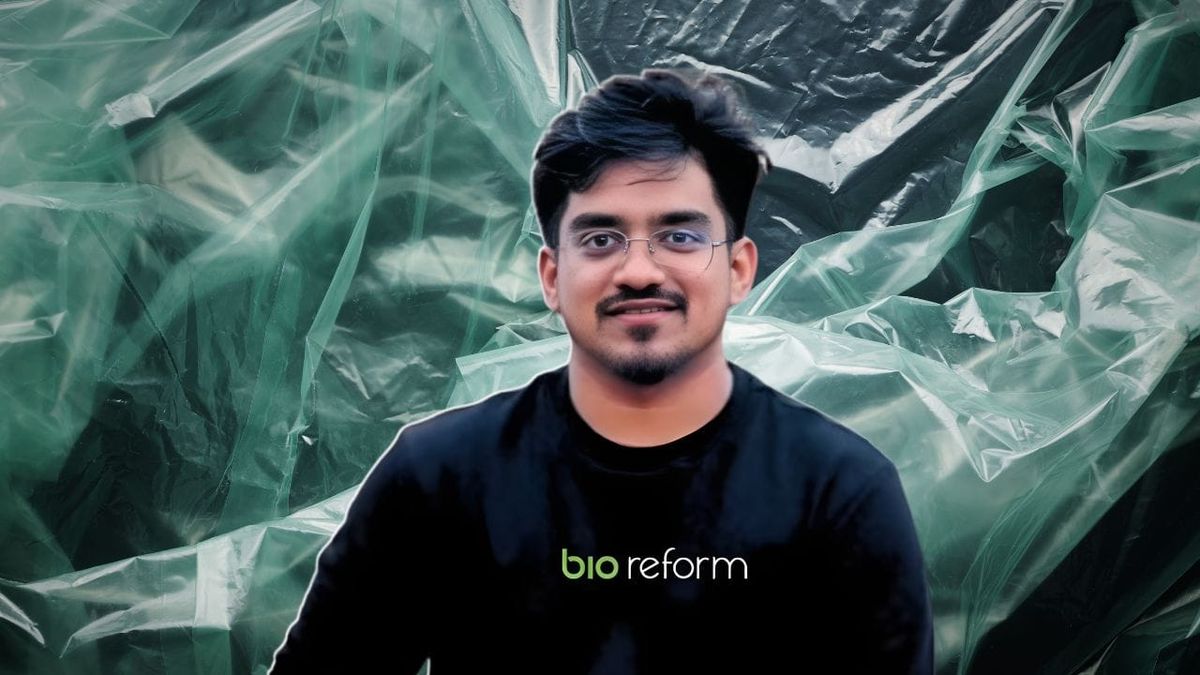
Meet Azhar Mohiuddin, the Hyderabad founder who built BioReform to fight plastic pollution, and has already replaced 15 million plastic bags across 4 countries.
Every piece of plastic ever made is still somewhere on Earth.
That single thought stopped Mohammed Azhar Mohiuddin cold when he first encountered it at the age of 20, locked inside his house during the COVID-19 pandemic. Most of his friends were busy creating short-form videos and chasing social media followers. Azhar was chasing something else entirely, a solution to what he calls "a silent crisis that will outlive everyone alive today."
Four years later, the young founder from Hyderabad has built BioReform, a startup that manufactures 100% compostable bags from plant-based biopolymers, and has already replaced over 15 million single-use plastic bags across 12 Indian cities and 4 countries. The numbers alone are striking. But the story behind them is something else.
The Making of a Founder
Azhar grew up between two worlds. Born in Karimnagar, Telangana, he spent much of his childhood in Saudi Arabia, where his father worked as a land surveyor, a man of humble origins who, unlike many NRIs, chose not to invest his savings in real estate but instead brought his entire family to perform Umrah every year.
"My father used to save money and invite our entire family for Umrah," Azhar recalls with deep affection. "That taught me what really matters in life."
In Saudi Arabia, Azhar's father insisted he pursue Hifdh, the memorisation of the Quran, alongside his formal schooling, despite well-meaning relatives warning it couldn't be done. He proved them wrong. Today, Azhar holds a remarkable set of credentials: he is a Hafiz of the Quran, a qualified engineer, a management postgraduate, and a startup founder. He credits all of it to his parents.
"Alhamdulillah, we didn't listen to people who said it couldn't be done," he says. "All because of the hard work of my father and mother. Mashallah."
His entrepreneurial instincts showed up early. At around 13 or 14, back in India for his 10th grade, Azhar talked his mother into giving him money to buy goats to sell during Bakrid. It worked. He went on to design logos, build websites, open a cloud kitchen listed on Swiggy and Zomato, calling it Azhar's Bistro, sell T-shirts wholesale from Mumbai, and at just 17, run a cleaning services company where he personally scrubbed floors and cleaned washrooms when labourers failed to show up.
"My first investor was my mom. No revenue, no product — just an idea to buy some goats and sell them in the market. She believed in me anyway."
His father eventually put a stop to the cleaning business; he didn't quite approve of his son mopping floors. But by then, Azhar had already learned his most important early lesson: that no work is beneath you when you've given your word to a client.
A Pandemic, a Problem, and a Purpose
When COVID-19 shut down colleges in 2020, Azhar, then in his second year of engineering, found himself with something he had never had before: time. And with time came clarity.
"I wondered what I was really even chasing," he says. "I thought, rather than chasing money, let me chase problems I can solve. And then money can come as a byproduct."
The problem he kept coming back to was plastic. India generates millions of tonnes of plastic waste every year, much of it burned openly or buried in landfills. Microplastics have been found in bottled water, in marine life, and even in human blood. And yet, awareness campaigns alone were doing nothing to change behaviour. The reason was simple and stubborn: there was no real alternative that matched plastic's properties, water resistance, durability, lightness, tensile strength, at a price small businesses could afford.
Cloth bags were expensive. Paper bags fell apart in rain. Jute was even pricier. And the Indian government had just announced its ambition to become single-use plastic-free by 2025.
"Unless we have an alternative, there is no way to curb plastic usage," Azhar realised. "I wanted to find something that could mirror the properties of plastic while being eco-friendly and cheaper than paper, cloth, and jute."
That search led him to biopolymers: materials derived from corn starch, sugars, and cellulose that could be processed into bags that look and feel like plastic, but decompose naturally within 180 days. He had his idea. Now he needed to build it.
A Factory Built on Faith
Being a 21-year-old engineering student with no industrial background, no supply chain knowledge, and no manufacturing experience, Azhar had everything to figure out from scratch. He got his uncle interested in the project, who came on board as co-founder and early investor. Knowing her brother was involved gave Azhar's mother the confidence to back the idea.
But the road ahead was brutally hard.
His grades began to slip. He was scammed by fraudsters who promised manufacturing machinery that didn't exist, they took his uncle and him all the way to Delhi, where the "contact person" stopped answering calls and the promised address turned out to be barren land. "I had somehow convinced my parents," Azhar says quietly, "and I did not want to go back home empty-handed."
They pressed on. A new lead took them to Gujarat, but they arrived during a COVID curfew and were turned away from their hotel for lacking an RT-PCR report. Azhar spent the night stranded on the road. The next morning, exhausted and uncertain, they finally saw the machinery running live. It was real. It worked.
The Gujarat trip was the turning point. Azhar now knew exactly what machinery he needed and where to get it. Around the same time, a major breakthrough arrived back home: BioReform was selected from over 500 applicants for the Edventure Park incubator programme in Hyderabad, one of the city's most respected student startup incubators. With it came something even more critical: pre-seed funding.
That money made the machinery purchase possible. Azhar ordered the equipment from Gujarat, navigated the logistics of getting it transported to Hyderabad, and began the painstaking process of setting up a manufacturing unit from scratch in Jeedimetla, an industrial area on the outskirts of the city. He had no prior experience running a factory. He learned everything on the job: how to install the machines, how to calibrate them, how to source raw materials, how to manage workers, how to obtain government licences, and how to do all of it without paying a single bribe, despite being told repeatedly that there was no other way.
In January 2022, at the age of 22, Azhar inaugurated his factory. On the very same day, his uncle, his co-founder and the person who had stood by him through every setback, quit the company for personal reasons.
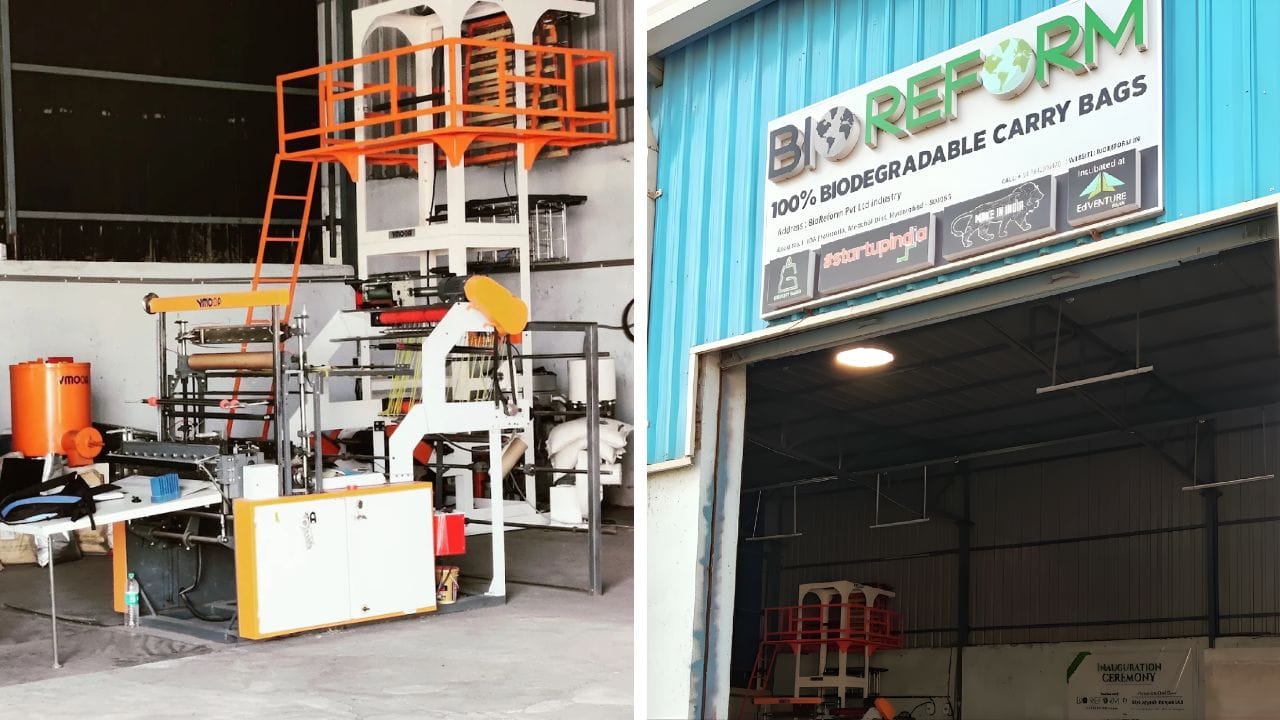
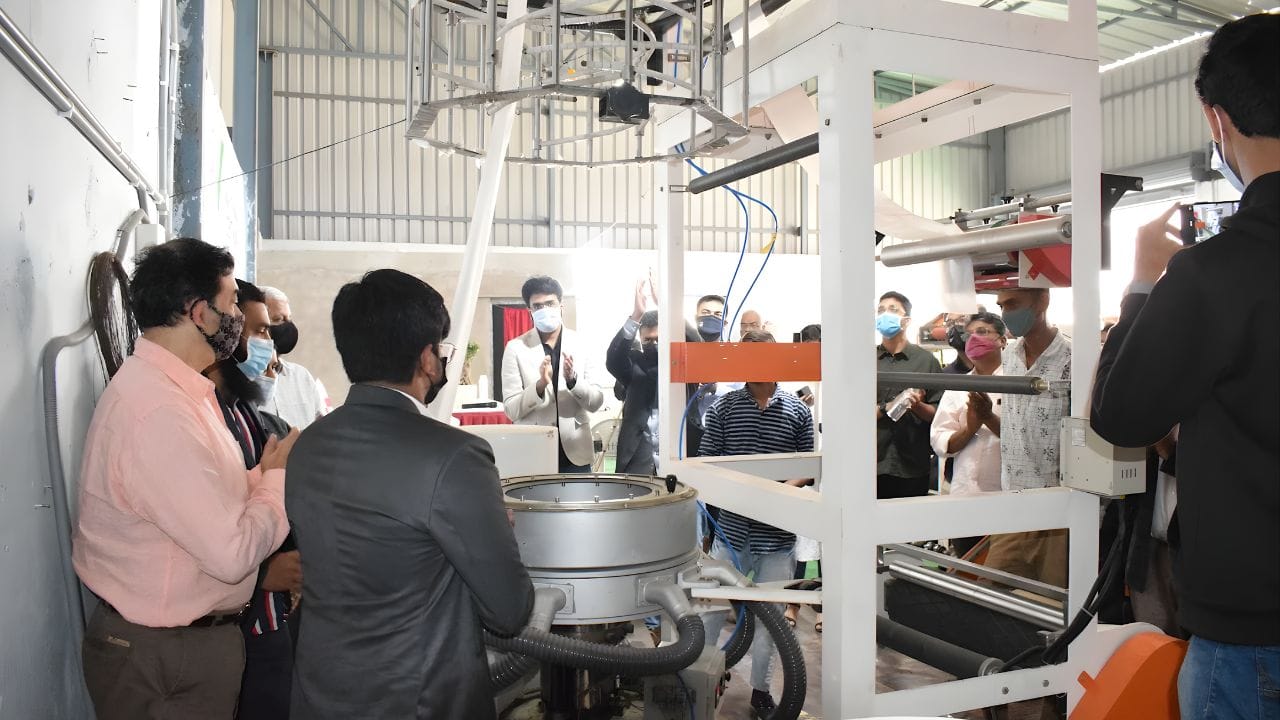
In 2022, Azhar inaugurated his factory in Hyderabad.
Azhar was now alone. On many nights, rather than making the journey home, he would simply sleep in a corner of the factory, exhausted by the work to leave. By day, he collected raw materials, helped workers manufacture bags, and delivered products on his own, all while somehow trying to attend college. His grades plummeted. He accumulated 14 to 15 backlogs in his engineering exams.
The First Customer: Three Failed Orders and One Big Win
BioReform's first client was Mr. Faddy, a fast food outlet in Toli Chowki. The owner agreed to try the bags even though they cost nearly twice as much as regular plastic, a decision driven more by curiosity than compulsion, since the government's plastic ban hadn't fully kicked in yet.
The first batch arrived with the printing all wrong, logos and text smeared across the bags. The customer was disappointed, but placed another order. The second batch arrived with broken handles; the machines had sealed at 130 degrees instead of the required 150. Another failure. But the client gave them a third chance.
The third batch was perfect. Mr. Faddy placed a bulk order of 300 to 400 kilograms. That order became BioReform's first portfolio piece, the proof of concept they used to knock on every other door.
"We used that order to get more clients," Azhar says. "And then we kept going."
On the Brink: Prayer, Backlogs, and a Believer
A year into operations, BioReform was on the verge of shutting down. Revenue wasn't enough to sustain the factory. Azhar had failed at balancing both his studies and his startup. Then came a moment that many founders in his position would have quietly walked away from.
His family, following his father's annual tradition, left for Umrah. Azhar went too. He stood in prayer and asked for what he needed most, not money, but grace. "We were literally praying that may Allah save us, may he save our honour," he says.
When he returned, something shifted. He cleared all his engineering backlogs in one go. Azhar wants to especially recall two friends who stood by him during this period, Abdul Rab and Omer Jaleel. While he was running a factory by day, they would sit with him at night, share their notes, and push him to study. And then came the investor, a man who, just three minutes into Azhar's pitch, interrupted him: "Whatever you are doing, I don't care. You have that spark. It's you I'm investing in, and I will not regret if I lose this money."
"He literally said, 'I am investing money in you.' That was our one-year learning."
With renewed funding, BioReform revived within months.
Values Over Everything: No Bribes, No Additives, No Compromise
As BioReform grew, it faced a different kind of pressure, one that tests many Indian businesses early and often. To obtain factory licences, Azhar was told plainly that bribes were simply how things worked. He refused. He got the licences anyway, the right way.
Then came the product integrity battle. A flood of cheaper "biodegradable" bags began appearing in the market, products that, Azhar says, contain 5 to 10 per cent plastic additives. Some of his own customers came back asking why they shouldn't just switch to the cheaper option.
"We explained why they are cheaper. And when some of them said, why don't you sell like them, we refused," Azhar says. "We cannot compromise on the quality of the product by adding additives. From day one, we chose: even if we lose customers, we will not sell mixed products."
From the very beginning, he also told his investors: if BioReform ever faced a crisis and the only path forward was an interest-based loan, he would rather close the factory. "That is against my beliefs," he says simply. "And if we have to sell goods by lying, I will not do it."
"We are showing young entrepreneurs that doing business with values and the right way is possible."
Building for the Planet: 15 Million Bags and Counting
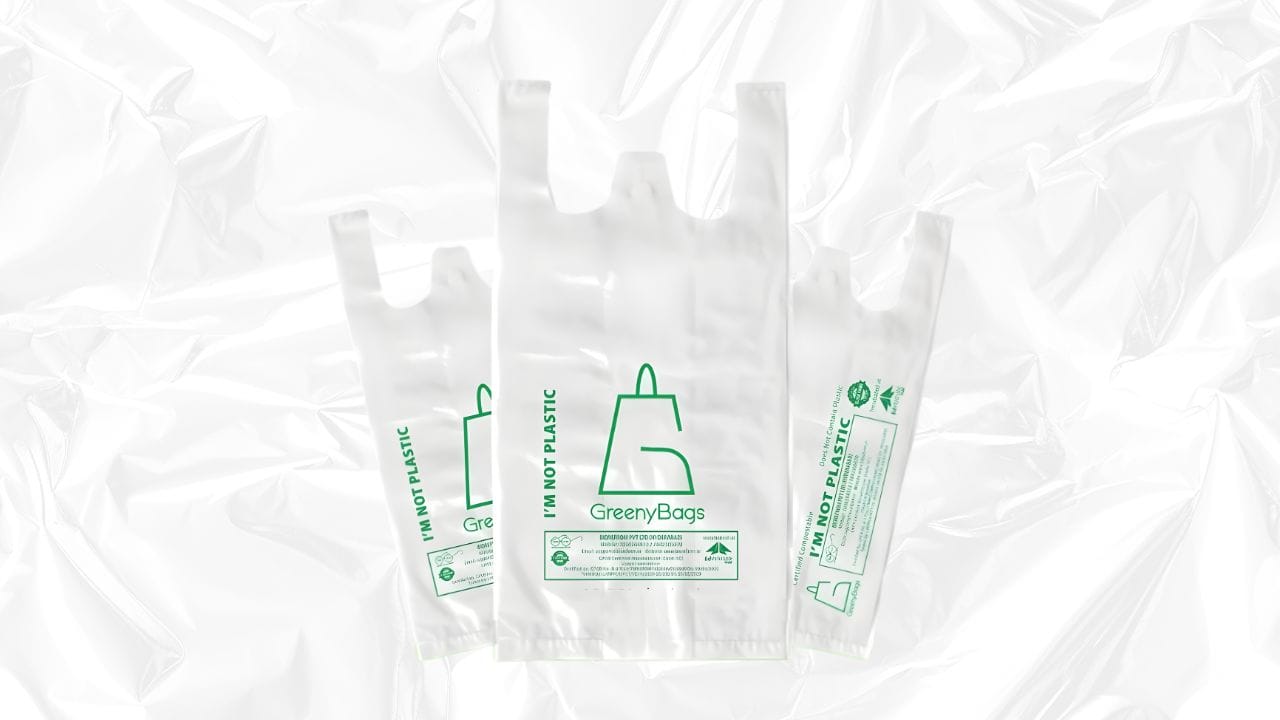
Today, BioReform operates five machines with an 11-member team and serves over 300 clients. Its product range includes compostable carry bags, biomedical waste bags, garbage bags, food pouches, and book wraps, all of which break down within 180 days into compost, not microplastics. The company has also developed India's first eco-friendly food-grade milk packaging and non-adhesive barricading tapes tested across climate extremes from Rajasthan to Kerala.
The customer base tells an interesting story. About 60% of BioReform's clients use the product because of regulatory pressure: the plastic ban. Another 20 to 30% are what Azhar calls "aspirational" brands who want to signal their values to their own customers. The remaining 5 to 10% are corporates with internal sustainability mandates. It's the corporate clients, Azhar notes, who deliver the most profitable margins.
The company is now present across 12 cities in India and 4 countries, with distributors in Riyadh, Abu Dhabi, and London.
Global Recognition: The World Is Watching
The world has taken notice of what this young founder from Hyderabad is building.
BioReform has been recognised as a United Nations Office for Project Services (UNOPS) case study, a formal acknowledgement of its role in addressing plastic pollution, and featured as part of the PLEASE Project, backed by the World Bank, Climate Collective, and UNOPS, which aims to create a plastic-free island nation.
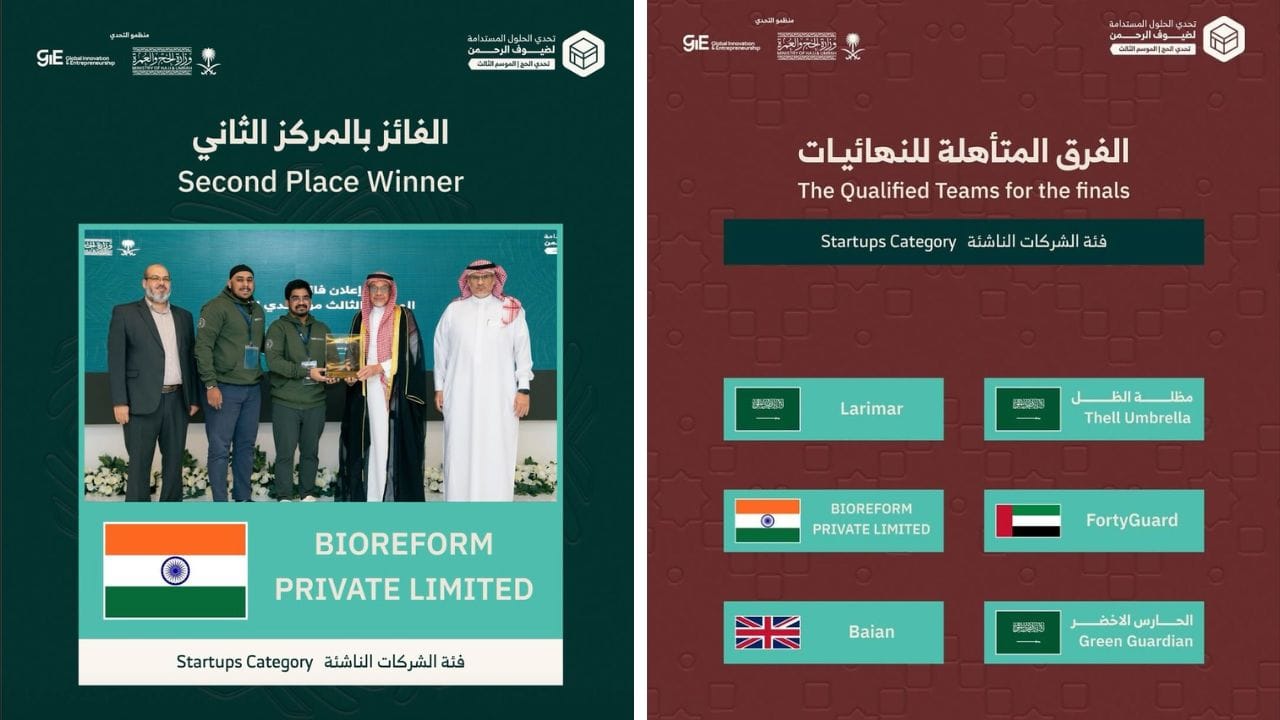
In early 2026, BioReform scored one of its most meaningful international wins: second place out of more than 300 startups from 40 countries, including the US and UK, at the Sustainable Solutions for Pilgrims Haj Challenge, organised by Saudi Arabia's Ministry of Haj and Umrah. The competition recognised BioReform's biodegradable packaging solutions for large-scale pilgrimage environments — a context deeply personal to Azhar, whose family has performed Umrah together every year.
"Haj brings together one of the largest human gatherings in the world, and sustainability must become an integral part of that experience," Azhar said on receiving the award. "This validates our belief that innovations developed in India can address global environmental challenges."
In the same period, BioReform was featured as a case study by EnterpriseAM as it uses the UAE-India CEPA Council's Startup Series to expand into the Gulf — selected as one of only five winners from over 20,000 applications, receiving a full soft-landing package in the UAE including incubation support, business setup assistance, and trade licences from RAKEZ, the Ras Al Khaimah Economic Zone. The company showcased its GreenyBags at Expand North Star in Dubai, the world's largest startup event, and is now in active discussions to set up a manufacturing facility in Ras Al Khaimah.
These global honours sit alongside a growing list of domestic recognitions: Top 40 at the Zomato Sustainability Expo Packathon 2025, Top 8 at the Lufthansa Group's Impact Lab, Top 100 at Maharashtra Startup Week 2025, the AMP National Award for social impact, and the "Fastest Growing Company" recognition from Edventure Park, BioReform's third award from the very incubator that believed in it first.
The company has been incubated at the AIC-IIIT Hyderabad Sustainability Cohort 2, received milestone-based seed grants through the EPAM Social Impact Innovation Programme, and joined Kotak Bizlabs at T-Hub.
A Message to Young Entrepreneurs
When Azhar speaks to aspiring founders, his message is grounded not in startup jargon but in something deeper. He pushes back gently against those who suggest that religious values and modern entrepreneurship don't mix.
"If somebody comes and tells you that Islamic entrepreneurial principles don't work in today's economy, show them BioReform," he says. "We have not made it to a billion-dollar company. But we have made it from zero to a nine-figure company, Alhamdulillah, without compromising by even a pinch."
Azhar claims he has never paid a bribe. He has never taken an interest-based loan. He has never sold a compromised product. "A Muslim can live without fear," he says. "And if you are a Muslim, you cannot be foolish, you have to figure out ways to do it without diluting your faith, your ethics, and your values".
What Comes Next
According to Azhar, BioReform is just getting started. His immediate goal is to replace 100 million single-use plastic bags. His company is gearing up for a seed round of approximately USD 200,000 and has soft commitments from investors in Saudi Arabia for when a Gulf manufacturing unit comes online.
New product lines are in development: flexible sustainable packaging for disposable food containers, biomedical packaging for glucose bottles, injections and urinary bags — all engineered from biopolymers.
The journey from a college dormitory and a scammed trip to Delhi, to a UNOPS case study and a stage in Dubai, has been anything but linear. But Azhar carries it all lightly with gratitude, with purpose, and with the kind of quiet confidence that comes from a man who has staked his enterprise on his values and won.
"I feel content when I go back to sleep. But much more needs to be done to make India plastic-free, and I will continue to strive for it."
Fifteen million bags at a time, the boy from Hyderabad is quietly cleaning up the world.